Anúncios
Can a single outfit change how the world sees a celebrity? This question frames a look at figures whose influence shaped wardrobes and moments across eras.
This section previews a historically grounded, modern-facing best dressed fashion icons list that spans Old Hollywood, royals, music legends, streetwear and menswear. Readers will find clear, scannable categories so they can jump to the names they care about.
The piece argues that true recognition comes from influence, consistency, and the power to make a look resonate worldwide—not only from price tags. It will highlight signature moments like the little black dress, the coat dress, and headline-making red carpet choices.
Expect an informational, context-rich guide that ties career arcs and cultural impact to practical inspiration. The aim is to inform decisions about personal style and reference points, not to sell items.
What Makes Someone a Best Dressed Fashion Icon?
True sartorial influence is measured by consistency, reinvention, and cultural reach. The question here is simple: who changes what people wear and why that change endures. This section lays out a clear framework to score public figures across eras.
Anúncios
Longevity, evolution, and a signature look
Longevity means relevance over years without losing a signature visual identity. A strong rule of thumb is steady presence over time combined with visible evolution.
Trendsetting power and cultural influence
Trendsetting goes beyond virality. It measures the power to change what people buy and wear, from red carpets to streetwear. Cultural influence gauges who sparks conversation and whose looks become shorthand for an era.
Designer relationships, brand partnerships, and runway impact
Long-term ties to designers, custom commissions, and front-row credibility amplify impact. Modern partnerships with brands and ambassador deals also turn personal style into measurable business value.
Anúncios
- Three-part framework: stay relevant, evolve without losing identity, and build visual consistency.
- Differentiate a memorable outfit from an iconic moment by repeatability and narrative.
How This List Was Curated Using Fashion History and 21st-Century Style Metrics
Editors paired historical records with digital-era signals to map who really moved style over time.
Research combined measurable attention—search trends, runway partnerships, press reach—with proven cultural influence from history and archival wardrobe patterns.
The process balanced headline red carpet moments with street proof and long-term closets. A single Met Gala appearance can spark conversation, but repeated wardrobe choices show consistent taste.
Innovation was treated as a core filter. Candidates who risked controversial looks and then normalized those choices earned higher weight.
“Icons are those who create conversation as much as flattering silhouettes.”
- The method mixes trend impact, designer ties, and cultural conversation metrics.
- Entries are grouped for discovery and practical inspiration—not ranked as a single winner.
- Each profile ties outfits and looks to the era they reshaped and why they still matter.
Best Dressed Fashion Icons List
Below is a compact guide to the categories that produce enduring personal style and cultural moments. It frames who influences wardrobes across eras and why their looks keep circulating in public conversation.
Scope at a glance
The piece groups entries across seven clear categories so readers can jump to what matters: First Lady polish, Old Hollywood glamour, royal moments, music-led reinvention, model-off-duty influence, modern pop powerhouses, and menswear innovators.
- Cross-category coverage shows how varied sources combine to shape modern fashion and street-level dressing.
- Each group highlights figures who keep a consistent identity while adapting to new trends over years.
- Media impact is measured by repeated coverage, iconic photographs, and looks that become widely referenced around the world.
The selection mixes classic names like Audrey Hepburn with modern cultural powerhouses such as Rihanna and Zendaya. Readers are invited to use the later “how to get the vibe” section to turn inspiration into wearable choices without copying a single celebrity look.
First Lady Style and American Power Dressing
First ladies have long used clothes as shorthand for authority and empathy. Their public wardrobe must read as official, yet approachable, and as a result it shapes national perception over time.
Jackie Kennedy’s tailored templates
Jackie Kennedy made the tailored coat dress and the pillbox hat enduring templates for polished occasionwear. Her neat lines and coordinated sets created a visual language for formal public duties.
Michelle Obama’s modern reach
Michelle Obama broadened that language. She highlighted American designers on global stages and redefined what formal looks like for women in public life.
Workwear, image, and practical takeaways
First lady clothing acts as American power dressing: it conveys authority, approachability, and national image together. Clean lines, intentional color, and structured silhouettes translate well to everyday work wardrobes.
- Structured outerwear for instant polish.
- Coordinated sets that simplify a public look.
- Minimal accessories that emphasize leadership rather than flash.
| Figure | Signature | Workwear Translation |
|---|---|---|
| Jackie Kennedy | Pillbox hat; tailored coat dress | Structured coats; matching skirt sets |
| Michelle Obama | Bright colors; U.S. designers | Statement coats; modern silhouettes |
| Shared impact | Repeated, photographed choices | Consistent, repeatable professional looks |
Old Hollywood Glamour That Still Shapes Dresses Today
The golden age of cinema established visual rules that many gowns still follow today. Silhouette, shine, and a clear star identity became the shorthand for a memorable red carpet look.
Audrey Hepburn and the timeless black dress blueprint
Audrey Hepburn codified elegant minimalism. Her simple little black dress and lean tailoring teach how restraint creates enduring beauty.
Marilyn Monroe and body-conscious silhouettes
Marilyn normalized figure-embracing gowns. That embrace of curves still appears in modern dresses and celebrity styling.
Grace Kelly and polished everyday ease
Grace Kelly showed that elevated everyday outfits can read as official glamour. Her calm, tailored approach made casual polish a staple of public life.
Sophia Loren and figure-forward glamour
Sophia Loren celebrated bold curves and confident posture. Her approach widened ideals of beauty and influenced fabric choices and cuts for decades.
“Studio-era silhouettes gave the red carpet a language: choose a shape, refine the finish, and the look will speak.”
Today’s designers still reference these archetypes. For practical use, pick one classic shape—column, fit-and-flare, or sheath—and personalize it with fabric, color, and accessories to make a historic silhouette feel modern.
Royal and Society Icons Who Turned Style Into a Global Moment
A single photograph of a royal can make an outfit into a cultural benchmark almost instantly. Visibility, symbolism, and relentless photography turned private clothes into public moments that shaped what people wore for years.
Princess Diana moved from formal, traditional royal dressing toward bolder, modern choices. Her later looks favored playful color, relaxed tailoring, and joyful dressing that suggested confidence and reinvention.
Those shifts became repeatable reference points. Photographs of Diana’s coats, evening gowns, and casual separates influenced global taste and press coverage for years.
Carolyn Bessette Kennedy’s minimalist ‘90s approach
Carolyn Bessette Kennedy favored elevated basics: sleek outerwear, clean denim, and an understated black dress. Her wardrobe relied on fewer pieces with better fit and neutral palettes that photographed well and aged gracefully.
Practical takeaways:
- Invest in a great coat that frames every outfit.
- Buy clean, well-fitted jeans that work with dressier pieces.
- Keep one minimal evening option—a plain black dress that can be restyled for years.
| Figure | Signature Strategy | Wardrobe Elements |
|---|---|---|
| Princess Diana | Evolution to joyful, modern dressing | Statement coats, color, relaxed tailoring |
| Carolyn Bessette Kennedy | Minimal, elevated basics | Sleek outerwear, refined jeans, plain black dress |
| Shared impact | Photographed moments became cultural cues | Simple, repeatable looks that endure for years |
“A single photo can rewrite the rules of what a public wardrobe should say.”
Music Legends Who Made Fashion Part of Their Career
Music has a unique power to turn stage moments into wardrobe movements. Tours, videos, and repeated performances give outfits repeated exposure. That repetition can elevate a look into a cultural reference.
Madonna used reinvention as branding. From lace gloves in the Like a Virgin era to theatrical, Evita-inspired tailoring, each phase reset her public image and tied a clear visual to a musical chapter.
Cher pushed boundaries across decades. Her stage-ready costumes and red carpet choices show why longevity and risk-taking create sustained relevance for women in music.
Diana Ross set an early template for concert glamour: dramatic silhouettes, high-impact styling, and performance-ready couture that modern artists still reference when designing tour wardrobes.
Erykah Badu blends signature headwraps with avant-garde couture, including custom Met Gala looks. Her approach turns personal identity into wearable storytelling and earned industry recognition.
Hip-hop pioneers changed designer relationships, too. Lil’ Kim proved that women could use luxury labels as a tool of presence and power, creating a blueprint embraced by later generations.
“Pick one stage element — a bold accessory, a dramatic sleeve, or statement hair — and let it become your signature.
Practical inspiration: translate that element to everyday outfits to keep a theatrical edge without copying a specific look.
Modern Pop and Cultural Powerhouses Driving Today’s Trends
Modern pop stars now shape what millions wear by mixing commerce, image, and deliberate risk. These figures turn singular moments into ongoing cultural currency.
Rihanna: industry shift and business-first influence
Rihanna holds CFDA recognition and uses her platform to build brands and retail momentum. Her work blends runway credibility with commercial reach.
Beyoncé: fashion as staged storytelling
Beyoncé treats clothing like theater. She highlights Black creatives and stages looks through close collaboration, turning outfits into curated narratives.
Jennifer Lopez: one dress, global conversation
J.Lo’s green Versace moment changed how the press and internet amplify a single gown. That spike in attention reshaped how celebrities and brands time reveals.
Lady Gaga: risk, concept, and headline-making identity
Lady Gaga built a legacy on high-concept outfits that provoke discussion. Bold risk becomes an expected part of her public persona and creative output.
“Pick one bold idea per outfit—color, texture, or silhouette—and keep the rest restrained.”
| Figure | How they influence trends | Takeaway for readers |
|---|---|---|
| Rihanna | Business ventures + runway credibility | Mix one signature piece with wearable basics |
| Beyoncé | Creative teams elevate each look to performance | Collaborate with trusted creatives for cohesive outfits |
| Jennifer Lopez | Single red carpet moments drive internet demand | Use one memorable element and balance the rest |
| Lady Gaga | Theatrical risk that sparks cultural conversation | Test bold ideas in small ways before committing |
Red Carpet Chameleons and Couture Risk-Takers
Red carpet appearances can act like short films—each look tells a character’s story in fabric and finish. A “red carpet chameleon” is a star who treats every arrival as a new role while keeping a clear, coherent style thread.
Zendaya: transformation through stylist-led storytelling
Zendaya and stylist Law Roach craft distinct eras by mixing reference points with precise tailoring. Their process ties hair, makeup, and silhouette into one narratively driven look.
Nicole Kidman: fearless color and unexpected cuts
Kidman earns designers’ trust by taking risks with color, cutouts, and unusual silhouettes. Those choices expand what elegant dressing can be and invite creative tailoring.
Blake Lively: narrative dressing and Met Gala craftsmanship
Blake Lively’s 2022 Versace Met Gala reveal used a Statue of Liberty color-change technique to make the garment a staged event. Her approach emphasizes couture-level construction and storytelling.
“Couture risk differs from costume: impeccable fit, intentional references, and controlled styling choices.”
- Practical idea: pick one couture concept—drape, structure, or embellishment—and scale it for daily wear.
- Keep fit precise, references intentional, and accessories minimal to translate event-level craft into real life.
Model-Off-Duty and Street Style Icons Who Defined a Generation
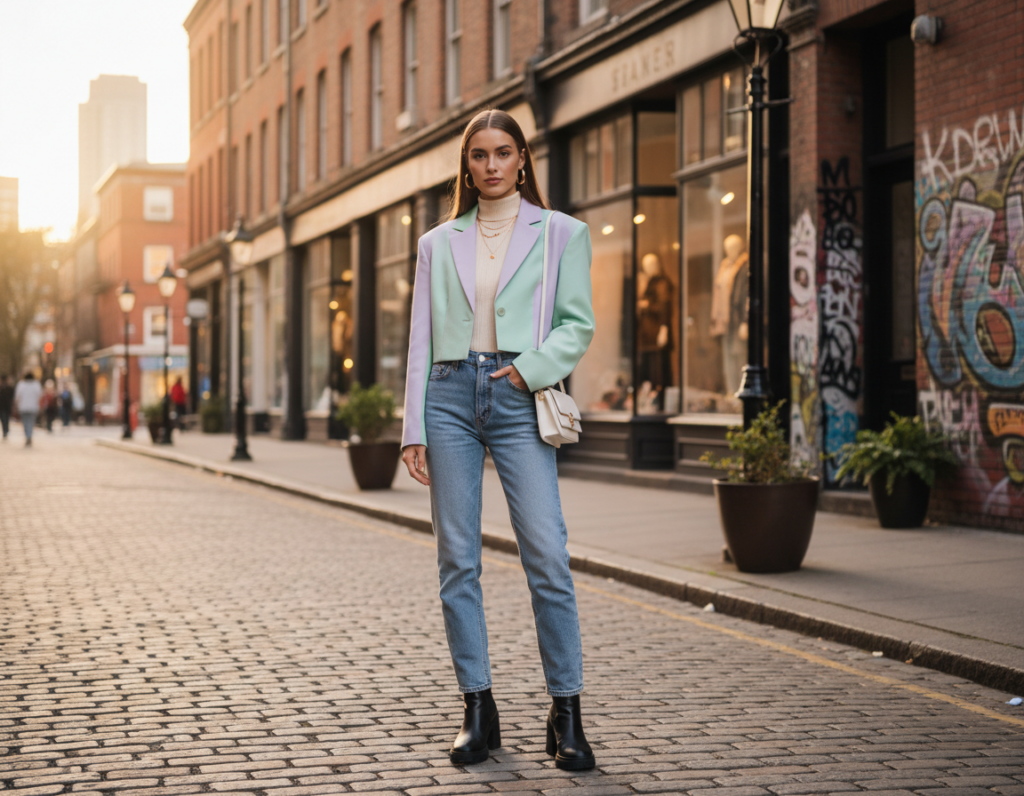
A model’s day off can become the era’s blueprint for wearable cool. Model-off-duty is a specific lane: repeatable outfits that photograph well and still feel directional.
Bella Hadid’s micro-trend machine
Bella turned Pinterest-era mood boards into real-life cycles. Her jeans cuts, Samba sneakers, and niche eyewear often spark instant trend revivals.
She blends personal expression with public messaging—see her Cannes 2024 keffiyeh dress as statement dressing that also fuels street-level copying.
Kate Moss’s pared-back cool
Kate’s minimal approach across years made simple pieces feel timeless. Clean tees, lived-in denim, and an off-duty aura stay a go-to reference for everyday looks.
Jean Shrimpton and early street photography
Jean helped launch street-style coverage and normalized youthful silhouettes like the miniskirt. Photographers turned candid moments into cultural signals.
“Pick a reliable denim + tee + jacket uniform, then update it with one timely accessory.”
| Figure | Signature | Reader takeaway |
|---|---|---|
| Bella Hadid | Trend-forward jeans, sneakers, statement pieces | Copy one item — shoes or eyewear — to refresh a wardrobe |
| Kate Moss | Minimal staples; timeless tees and jeans | Invest in fit and fabric, keep layers simple |
| Jean Shrimpton | Youthful silhouettes, street-photography moments | Use photos to refine a clear, era-defining look |
The New Menswear Vanguard Changing the Way Men Dress
A new wave of menswear is rewriting red carpet codes and street rules alike. This shift moves men away from a uniform tuxedo toward playful color, jewelry, and silhouette experiments.
Timothée Chalamet delivered a defining moment at the 2019 Golden Globes in a custom Louis Vuitton by Virgil Abloh with a glitter harness. That look reframed suits as canvas for personality and risk.
His approach blends humor, polish, vintage references, and streetwear. Younger audiences followed because the looks felt accessible and memorable. From 2024 his collaboration with stylist Taylor McNeill shows how dressing is now collaborative world-building, not solo choice.
Harry Styles and a Broader Menswear Conversation
Harry Styles helped mainstream gender-neutral clothing in high fashion, expanding what menswear can include. Designers and audiences responded by loosening rules and celebrating varied silhouettes.
“Modernize a suit with one unexpected element—shoes, neckline, fabric, or an accessory—while keeping fit precise.”
- Shift: experimentation over uniformity.
- Key moment: Chalamet’s glitter harness as a red carpet reset.
- Reader tip: introduce one bold touch, then keep tailoring exact.
Gender-Fluid and Androgynous Icons Who Broke the Rules
Gender-fluid dressing rewrote red carpet rules and broadened who public clothing could speak to.
Billy Porter turned a tuxedo into a statement at the 2019 Oscars when he wore a black Christian Siriano tuxedo dress. The look challenged expectations, staged a clear cultural moment, and is now cited as a red carpet pivot in wider conversations about clothing and identity.
Billy Porter’s tuxedo dress
Porter paired theatrical tailoring with polished accessories to make the outfit both runway and ritual. It read as confidence plus craft, not costume.
Young Thug and the Jeffery gown
Young Thug’s lavender gown by Alessandro Trincone from the Jeffery era entered museum collections and changed how hip-hop engages with dresses. That museum recognition turned a personal choice into a public record of shifting norms.
Twiggy’s 1960s silhouette
Twiggy’s short hair, slim shape, and androgynous framing created a new model archetype. Her look remapped beauty ideals and helped normalize lean, androgynous proportions in mainstream style.
“Rule-breaking icons pair bold concepts with repeatable signatures.”
Reader takeaway: experiment with tailoring, proportion, and one signature detail—boots, jewelry, or color—rather than copying a full outfit. For historical context and related milestones, see historical milestones in queer style.
Streetwear to Runway: The Celebrities Who Became the Needle
Streetwear’s ascent hinged on a few cultural moments where celebrity taste turned underground codes into mainstream currency.
How it shifted: Collaborations and celebrity endorsements moved clothes from subculture to catwalk. Big brands learned that a star-backed drop could define a season and reshape silhouettes.
Travis Scott
Travis Scott made collaborations central. Deals with Nike, Activision, and McDonald’s tied music, merch, and runway-ready shapes into one repeatable model.
Kid Cudi
Kid Cudi bridged blog-era indie sleaze and streetwear staples. His authentic, low-key approach seeded trends that lasted beyond hype cycles.
Justin Bieber
During the Purpose era Bieber leaned into oversized comfort and grunge cues. Collaborations with Jerry Lorenzo and Fear of God shifted pop-star outfits toward relaxed tailoring.
Playboi Carti
Carti fused luxury and underground influence. His uncompromising looks echoed Rick Owens and pushed online subcultures to mimic couture references.
Shai Gilgeous-Alexander
Shai turned the NBA tunnel into a runway. Thrifting, Converse crossovers, and self-directed outfits proved runway polish need not come from a stylist.
“Build streetwear around clear proportion: one standout item, then keep the rest intentional.”
| Figure | Signature Move | Why it matters |
|---|---|---|
| Travis Scott | High-profile collaborations | Made drops cultural events and shifted silhouettes |
| Kid Cudi | Authentic, blog-era mood | Turned indie cues into lasting street staples |
| Justin Bieber | Oversized, grunge-influenced looks | Redefined pop-star everyday clothing |
| Playboi Carti | Luxury-meets-underground aesthetic | Influenced online subcultures and runway references |
| Shai Gilgeous-Alexander | NBA tunnel outfits; thrifted originals | Showed authenticity beats styled conformity |
Influencers, It-Girls, and Modern Classics That Still Work Today
Some modern names proved that repeatable, real-world dressing can outlast viral moments. Influence here means a clear, usable approach people can adopt today, not only online reach.
Alexa Chung and practical eclecticism
Alexa Chung helped define an early influencer era by mixing vintage pieces with high-street finds. Marie Claire credits her Mulberry collaboration and Marks & Spencer partnerships for turning eclectic pairings into tangible products.
Her formula is simple: a neutral base, one quirky item, and easy shoes. That makes her looks portable from weekends to casual work days and keeps the approach wearable for any girl refining her wardrobe.
Victoria Beckham’s designer-led minimalism
Victoria Beckham shifted from pop persona to respected designer with clean lines and polished tailoring. Her Paris Fashion Week debut in 2022 cemented a modern minimalism that translates to office outfits and evening looks without couture price tags.
“Mix one unexpected item into a neutral base.”
Reader takeaway: cultivate a personal sense by adding one standout shoe, print, or jacket to an otherwise restrained outfit. Collaborations and smart brands scale those formulas so practical style spreads beyond celebrity closets.
Signature Pieces That Became Fashion History
Some items turn into visual anchors of style history because they are instantly recognizable and endlessly wearable. These garments moved from single photos into repeated cultural cues that guided how people dressed over time.
The pillbox hat, the coat dress, and first lady polish
Jackie Kennedy’s pillbox and tailored coat dress created an archetype of structured, camera-ready polish. Those pieces were easy to copy and simple to photograph, which helped them become a recurring public look.
The little black dress and minimalist tailoring
Audrey Hepburn’s black dress proved that restraint can be radical. A clean silhouette and sharp tailoring made the black dress work across decades and codes.
Statement dresses and couture moments that dominated the Met Gala conversation
Met Gala events turned couture into headline-making statements. A dramatic gown photographed on that carpet could expand what felt possible for formal dressing almost overnight.
Jeans, white tees, and elevated basics as a lasting wardrobe strategy
Carolyn Bessette Kennedy showed how refined denim and a plain tee age well. Elevated basics—great jeans plus a white tee—stay useful for years and anchor daily dressing.
“Choose two forever pieces and one daily uniform to simplify choices and build consistency.”
| Piece | Historic Source | Why it endured |
|---|---|---|
| Coat dress & pillbox | Jackie Kennedy | Structured, repeatable, strong imagery |
| Black dress | Audrey Hepburn | Minimal tailoring; cross-era versatility |
| Denim + white tee | Carolyn Bessette Kennedy | Simple, wearable, easy to refresh |
Practical guide: pick one outerwear piece and one black dress as “forever” items, then keep a reliable denim + tee uniform for casual days.
How to Use These Icons as Style Inspiration Without Copying the Look
Learn the underlying rules—silhouette, color, and proportion—so outfits feel personal, not borrowed. Start by translating a single idea from a public figure into a practical wardrobe choice that suits daily life.
Building a wardrobe with timeless basics, then adding one signature element
Begin with well-fitting basics: a neutral coat, reliable jeans, a plain dress, and a crisp shirt. These pieces create a flexible foundation for many outfits.
Then add one signature element—a hat, a shoe, a bold necklace, or a tailoring detail—to make each look feel unique. This keeps the approach personal and sustainable.
Choosing designers and brands that match personal identity and lifestyle
Match brands and designers to daily needs. Office work often requires structured tailoring; nightlife or creative fields allow more playful pieces.
Fit-first matters most: good tailoring upgrades inexpensive clothes more than costly pieces that don’t fit. Use an icon mapping exercise—one reference for weekdays, one for events, one for weekends—to guide purchases.
- Capture the principle, not the exact garment: focus on silhouette, palette, or proportion.
- Buy with cost-per-wear and versatility in mind, not trend pressure.
- Prioritize tailoring and correct sizing for instant improvement.
“Choose one idea and make it yours—repeat it with small variations until it feels like a personal language.”
Conclusion
Across eras and stages, a clear point of view—more than any single garment—defines a true style icon.
The central criteria run through every entry: longevity, steady evolution, cultural influence, and a recognisable voice over time and years of public life.
Politics, Hollywood, royalty, music, streetwear, and menswear each produce figures with distinct logic. Together they map how trends begin, spread, and stick.
Major stages—couture runways and the Met Gala—amplify moments, but daily choices shape personal beauty and long-term wardrobe identity.
Readers can borrow principles—tailoring, precise proportion, one signature piece, and thoughtful styling—to build confidence across a career and wear looks that last.