Anúncios
Can a simple set of layers transform the way someone dresses from day to night—and across seasons? This guide answers that question with clear, usable steps.
Layering is more than piling clothes for warmth. It is a repeatable style system that makes clothes work harder for work, travel, and weekends.
The article delivers a practical, modern guide to layering that helps readers build polished looks without bulk. It previews a step-by-step method—base, mid, outer—so anyone knows how to apply each piece with purpose.
Expect a focus on clean proportions, visible layers, and smart fabric choices rather than overdoing it. The piece also covers color, texture, and accessories so a layered look reads intentional, not accidental.
Understanding Layering as a Style System
A clear plan for how each piece functions makes layers feel intentional instead of accidental. This approach treats dressing as a repeatable system, not guesswork.
Anúncios
What “layer on layer” clothing means
Layer on layer refers to combining garments of different weights, lengths, and textures to form a cohesive look. Each item has a role: base comfort, mid structure, outer protection. When pieces are chosen with purpose, even simple clothes read as curated.
Why this method works beyond warmth
Versatility is a major benefit — a few pieces create many looks. Layers make easy transitions when temperatures shift during the day. They also add depth and restrained visual interest by pairing smooth with textured, soft with structured, or matte with sheen.
Think in three levels: base, middle, outer. Use that simple way to repeat the system with different garments. The goal is polish: clean lines, intentional proportions, and controlled color so layers enhance style rather than hide it.
Anúncios
Modern outfit layering techniques for a polished, wearable look
Begin with a fitted, breathable base that sits smoothly against the skin. A tee or tank in cotton or modal stops bunching and keeps the rest of the look streamlined. Choose base pieces that wick moisture so the wearer stays comfortable through the day.
Start with a breathable base layer that fits smoothly
Base layers should be thin, even, and close to the body. They form the foundation of any outfit and make subsequent layers sit cleaner. A smooth base reduces bulk under shirts and jackets.
Add a middle layer for warmth without bulk
Pick a fine-gauge sweater, light cardigan, or crisp button-down for the middle layer. These choices add warmth while keeping mobility. They give structure without making the silhouette heavy.
Finish with an outer layer that matches the weather and the occasion
The final layer should respond to weather and dress code. A blazer reads polished for work; a jacket fits casual days; a coat protects against cold. This top piece completes the look and sets the tone.
Let underlayers show to create intentional depth and visual interest
Allow hems, collars, or cuffs to peek out. A shirt tail under a sweater or a turtleneck collar beneath a jacket adds subtle contrast. Those small reveals make the layers feel planned, not accidental.
Use proportions to avoid a bulky silhouette
Pair roomy outerwear with a slim base. Vary lengths—short jacket over a longer top—to keep lines clear. Avoid stacking equally thick materials in the same area to limit bulk.
Quick styling checks: ensure freedom of movement, easy removal of pieces, and a defined silhouette rather than a shapeless stack of layers. Small adjustments—like a belt or a rolled cuff—refine the final look.
Essential Layering Pieces to Build a Versatile Wardrobe
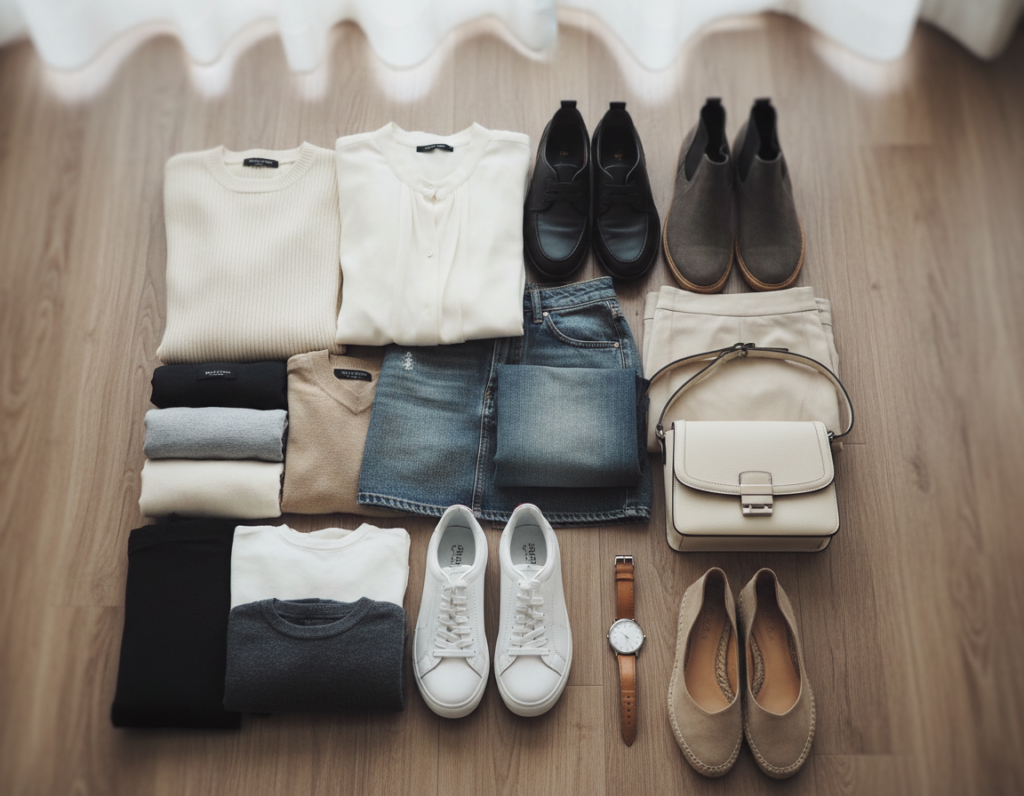
Building a flexible wardrobe starts with a few dependable garments that pair easily. Prioritize core pieces that serve many roles so dressing is faster and more consistent.
Base essentials
Base layers include tees, tanks, camis, long-sleeve shirts, and lightweight sweaters. Fit matters: these tops should sit smooth under other shirts and not add bulk.
Mid-layer options
Choose cardigans, button-downs, pullovers, and turtlenecks. Some mid pieces add warmth; others add structure and polish. A thin sweater or turtleneck gives insulation without weight.
Outer pieces for every use
Keep blazers, denim jackets, trench coats, wool coats, leather jackets, and overshirts on hand. A blazer reads professional, denim and jackets suit casual days, and a wool coat protects in cold weather.
Dresses and skirts as tools
A slip dress works solo or over a tee, and a skirt pairs with a sweater and boots to make year-round outfits. Dresses offer high reuse when layered thoughtfully.
“A well-built wardrobe makes dressing faster, more consistent, and more cost-effective.”
| Piece | Role | When to wear | Key fabric |
|---|---|---|---|
| Basic tee | Base | All day | Cotton |
| Cardigan | Mid | Layering, warmth | Merino |
| Blazer | Outer | Work, smart-casual | Wool blend |
| Slip dress | Top or dress | Solo or layered | Silk or modal |
Practical plan: start with neutral foundation pieces, then add a few standout pieces that mix well. For more examples and inspiration, consult the best layering clothes guide.
Mixing Fabrics, Textures, and Patterns for Modern Depth
Contrast in fabrics instantly makes an ensemble read intentional, even when colors stay neutral. Texture creates visual depth in a simple way. It adds interest without extra pieces.
Quick texture pairings to copy
- Cotton + leather: a cotton tee under a leather jacket for crisp contrast.
- Silk + wool: a silk cami beneath a wool blazer for refined balance.
- Denim + cashmere: denim with a soft knit brings casual-meets-luxe appeal.
Structured vs. soft balance
They should mix tailored pieces with relaxed tops. A fitted blazer or structured jacket reads polished.
Pair that with a drapey knit or soft tee to achieve a relaxed-meets-refined style. This way the silhouette stays clear and wearable.
Pattern strategy and checklist
Keep one statement print and ground it with neutrals. Choose a single bold print—stripe, plaid, or floral—and let other layers stay solid.
- Repeat one color from the print elsewhere in the look.
- Keep silhouettes simple when the print is strong.
- Limit competing textures if the pattern is bold.
Controlled contrast is the key: intentional mixes of fabrics and textures add depth and interest without making the look busy or costume-like. Use these pairings as a straightforward way to elevate everyday fashion.
Color and Styling Details That Make Layers Look Intentional
Deliberate color choices are the quickest way to make several layers read as one considered look. Colors signal intent and keep several pieces from feeling random.
Monochrome layering for a sleek, cohesive look
Use varied shades of the same color family and mix textures so the look stays rich, not flat. A navy tee, denim shirt, and wool coat in slightly different tones reads polished.
Neutral base with a pop of color
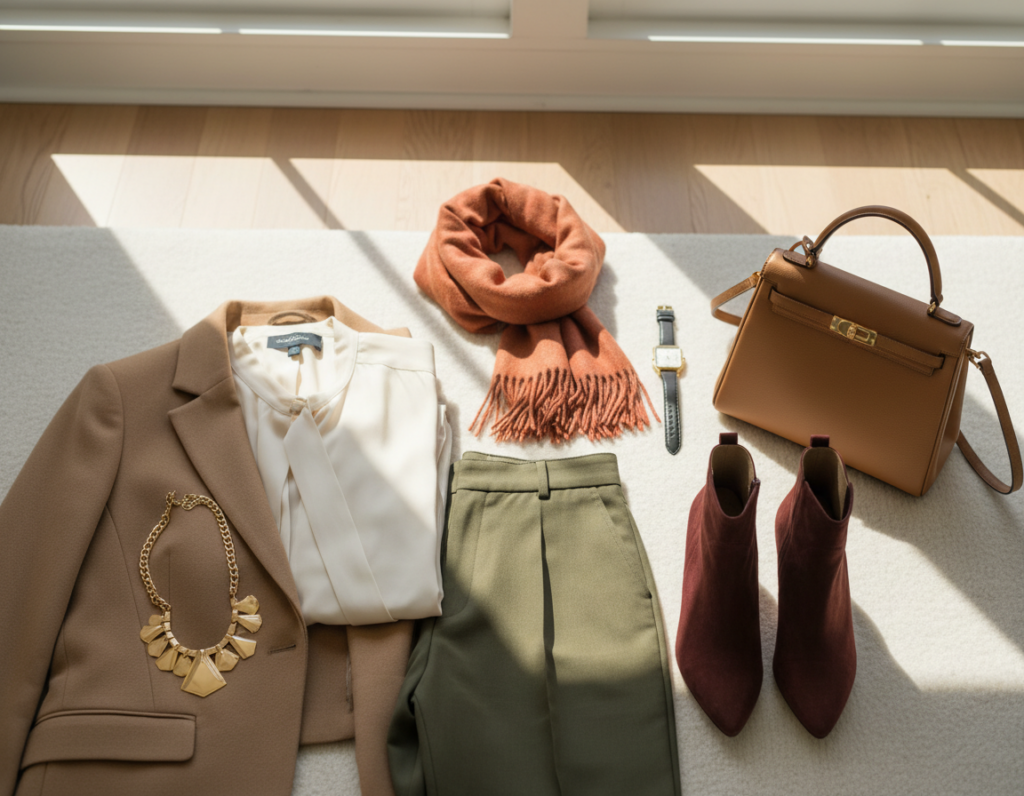
Start with black, white, beige, gray, or olive as a neutral foundation. Then add a pop via a scarf, hat, or socks. A single bright accessory gives controlled impact without overpowering the rest of the outfit.
Belts and jewelry as styling layers
Accessories work like extra layers: a scarf adds texture and warmth, a belt defines the waist over a cardigan or coat, and small jewelry draws the eye toward the face.
“Match the pop color to one small element—stitching, print color, or shoe detail—for instant cohesion.”
- Belt the outermost layer when the silhouette needs structure.
- Choose smaller jewelry if patterns or textures are already strong.
- Repeat the accessory pop color elsewhere in the look for balance.
Season-by-Season Layering: From Summer Breathability to Winter Warmth
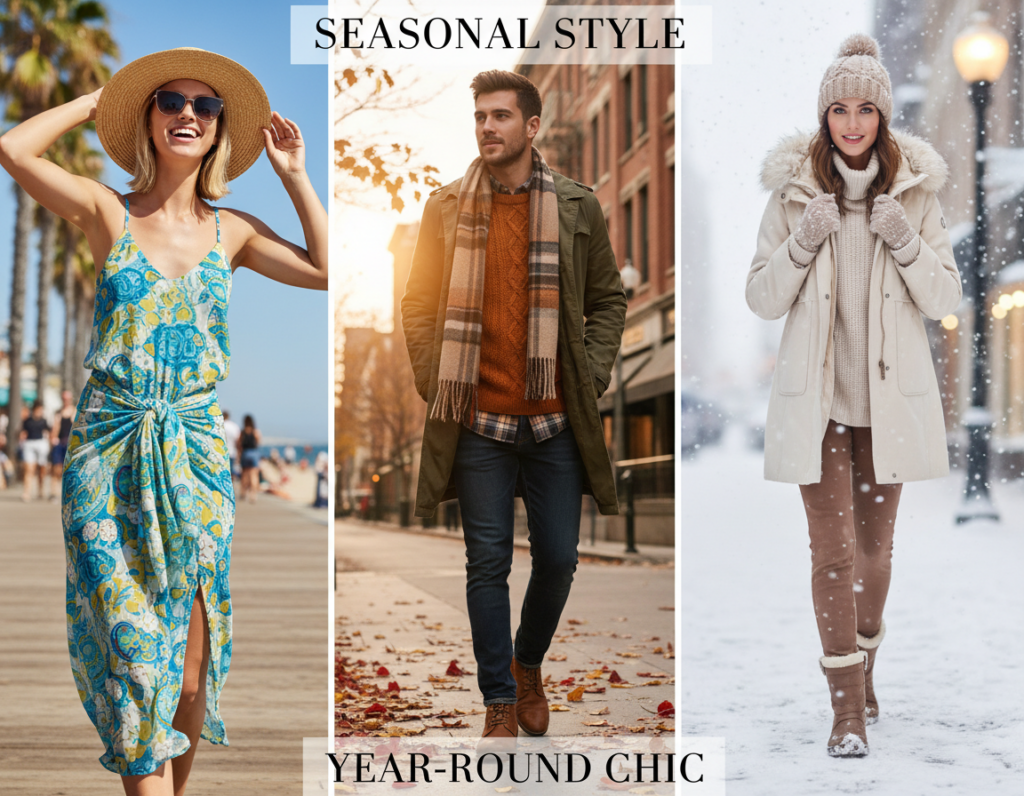
Adapting layers by season lets one stay comfortable and polished from warm days to cold nights. This playbook shows simple swaps so the same core clothes work year-round.
Spring
Spring calls for lightweight cotton, linen, and silk. A light top with an open button-down or a thin cardigan handles cool mornings and warmer afternoons.
Summer
In summer keep layers minimal and breathable. Try a linen shirt over a tank, a sheer blouse over a cami, or a light layer tied at the shoulders for strong air conditioning.
Fall
Fall is about texture and transition. Add a sweater, blazer, or scarf and mix denim with knit or wool with cotton to add depth without bulk.
Winter
For winter prioritize function: warm base layers, insulating knits like a turtleneck or chunky sweater, and a protective coat or down jacket. Finish with a hat and scarf for extra warmth.
“Build looks that can shed or add a layer and still read complete.”
Conclusion
Small choices in fit, texture, and color turn basic pieces into many polished looks. Start with a smooth base, add a functional mid layer, and finish with an outer piece that fits the day’s needs.
Intentional layering beats random stacking: controlled color, varied fabric, and visible underlayers create genuine depth without extra bulk. Balance proportions by mixing fitted and oversized pieces and varying lengths.
Use accessories as practical style tools. A belt or scarf defines shape and aids transitions between temperatures. A blazer or reliable jacket plus a few solid base pieces unlock multiple outfit options across seasons.
Final tip: practice the system often. Layering is an art—small adjustments in color, texture, and proportion yield big results in day-to-day fashion.