Anúncios
What makes a single look change how people dress for years to come?
Fashion was produced at huge scale, yet only a few moments truly stuck in public memory and shifted wardrobes across the United States and the world.
This guide curates a long-form list of defining fashion moments that still inform how people get dressed today. It draws on runway archives, red‑carpet images, and editorial milestones to explain why certain looks became cultural reference points.
Readers will find clear categories — postwar glamour, minimalist staples, royal moments, women’s suiting, pop-era signatures, and more — plus practical notes on what to borrow, what to modernize, and what to avoid.
Expect skimmable entries with deeper context under each heading so anyone can use history as usable wardrobe advice rather than museum cataloging.
Anúncios
Why Certain Fashion Looks Become Iconic
Sometimes a single photo or shape rewrites what people reach for in the morning. That change usually follows three practical mechanics: a distinctive silhouette, a repeatable styling formula, and a cultural moment that makes the image unavoidable.
Runway ideas turn into street uniforms when proportions and details are easy to copy. Tailoring lines, hem lengths, and a recognizable accessory let *people* translate a catwalk look into everyday wear.
When one image alters the way people dress
A single widely circulated image compresses a mood into something instantly legible. It becomes a shorthand that others can share and replicate, speeding the look into common view.
Anúncios
How media, celebrity, and timing cement fashion history
Magazine covers, televised awards, and paparazzi spreads used to set the pace. Now social platforms accelerate recognition, making standout moments rarer but more powerful.
- Distinct silhouette: easy to spot, easy to copy.
- Repeatable formula: one or two elements that anyone can mimic.
- Cultural moment: political, musical, or social context that makes the look feel inevitable.
Harper’s Bazaar asked whether a look entered culture, stayed memorable, and shifted how people dressed. The rest of this guide examines case studies that meet those criteria and shows how status gets built and endures.
For deeper examples, see a curated list of memorable looks in this fashion history roundup.
Postwar Glamour That Redefined Women’s Dressing
After World War II, garments signaled a deliberate return to ceremony and craft in women’s wardrobes. The moment restored focus on finish, proportion, and a renewed appetite for beauty.
Christian Dior’s New Look and the Bar suit era shift
Dior’s 1947 New Look centered on a nipped waist, structured shoulders, and a full skirt. Carmel Snow famously called it “a revolution” for its clear hourglass silhouette.
To echo that lesson now, use a belt over a fit-and-flare midi, pair sharp jackets with fuller skirts, or choose tailoring that defines the waist without excess volume.
Grace Kelly’s wedding dress as the classic bridal blueprint
Grace Kelly’s 1956 gown by Helen Rose set a lasting template: lace, long sleeves, a refined neckline, and a measured veil. That composition still informs how many choose a dress for formal ceremonies.
“It’s quite a revolution, dearie!”
| Moment | Key Elements | Modern Translation |
|---|---|---|
| Dior New Look (1947) | Nipped waist; full skirt; precise tailoring | Belted waists; fit-and-flare midis; sharp blazers |
| Grace Kelly (1956) | Lace sleeves; refined neckline; balanced veil | Long-sleeve bridal sheath; simple veils; minimalist beauty |
| Era shift | Volume, craft, hourglass proportion | Occasion wear and red-carpet codes |
These moments formed the foundation for many later approaches to formal dressing.
Little Black Dress Energy and the Power of Simplicity
Few garments have the quiet power to rewrite wardrobes the way the little black dress does. Its appeal comes from a tight formula: minimal lines, broad versatility, and an ability to be restyled for many occasions.
Coco Chanel’s LBD and modern minimalism before it had a name
When American Vogue published Chanel’s LBD in 1926, it changed what black meant in the 20th century. Black moved from uniforms and mourning to a garment of practical elegance.
Audrey Hepburn’s Givenchy-era elegance and clean lines
Hepburn’s Givenchy dress in Breakfast at Tiffany’s turned restraint into a signature. A sleek updo, minimal jewelry, and balanced proportions made the look instantly recognizable.
LBD energy checklist:
- Clean neckline
- Intentional hem length
- Strong fabric with good fall
- One focal accessory
| Element | Why it works | US-friendly translation |
|---|---|---|
| Minimal cut | Easy to remember and copy | Blazer over dress for office-to-evening |
| Single accessory | Creates a clear focal point | Swap flats for heels; add a small bag |
| Refined proportions | Feels polished and timeless | Trench or tailored coat for day |
Royal Style Moments That Still Influence Today’s World
Royal wardrobes often act like public signals, turning ceremonial dress into global conversation.
Princess Diana’s decisive moment
In 1994 Diana wore the so‑called “revenge dress,” a black, one‑shoulder gown that read as independence and control. The decisive silhouette and confident posture taught a simple lesson: owning a room matters more than heavy ornamentation.
Jackie Kennedy’s polished formula
Jackie O made tailored suits and disciplined accessories a language of presence. A neat suit, restrained jewelry, and crisp lines created a public image of calm authority that still informs modern workwear.
One hat that traveled the globe
Halston’s pillbox for Jackie at the 1961 inauguration proves one accessory can define a look. The hat’s dent detail and careful coordination with Oleg Cassini’s coat became widely copied, especially by audiences in New York and the United States.
Wearable updates: modern fits for suits, minimalist headbands or small hats, monochrome palettes, and understated luxury that reads current rather than costume.
“A single element—cut, color, or hat—can send a clear signal about authority.”
| Moment | Key element | Modern lesson |
|---|---|---|
| Diana’s 1994 dress | Decisive silhouette; confidence | Own the room; minimal accessories |
| Jackie O | Tailored suit; disciplined accessories | Polished workwear; clean lines |
| Halston pillbox | Single signature accessory | Small hat/headband; coordinated color |
| Outcome | Media visibility; ceremonial weight | Power dressing that shapes the world |
iconic style trends outfits inspiration From Effortless Off-Duty Uniforms
Everyday dressing — jeans, a tee, and confidence — has produced some of the most persistent public looks. Off‑duty formulas travel fast because they rely on regular pieces and an unmistakable attitude.
Jane Birkin’s jeans and a basket
Birkin’s 1974 combo of jeans, a white tee, and a basket bag created a simple, repeatable blueprint. To copy it now, pick slim or relaxed jeans, a soft tee, a leather belt, and a woven tote or small leather satchel.
Wear for: errands, weekend coffee, travel days.
Diana Ross at Studio 54
Diana Ross wore jeans and a torn tee while dancing in 1979. The point wasn’t roughness—it was joy. When a casual look is worn with ease, it reads as chic rather than careless.
Choose fitted denim, a clean hem, and a confident posture to channel that energy.
Kate Moss and the festival template
Kate Moss at Glastonbury in 2005 set a modern festival formula: weather‑proof layers, boots, short bottoms or skinny jeans, and an undone finish that still photographs well.
For US climates, swap micro‑shorts for denim cutoffs or lightweight chinos. Add a rain shell, rubber boots or ankle boots, and a compact bag for concerts and casual dinners.
“A single candid image can teach millions how to dress.”
Why it matters: These off‑duty images show how fashion spreads—one photo, one clear formula, and a confident wearer can define what people borrow for years.
Androgyny, Tailoring, and the Women’s Suit as a Statement
The tuxedo crossing into womenswear recoded public ideas about authority and gender. It did not only alter wardrobes; it created a visible claim about autonomy and modern presence. Fashion history records that shift in clear images and memorable fittings.
Yves Saint Laurent’s Le Smoking and blurred gender lines
Le Smoking (1966) stood as the first tuxedo for women credited by Vogue. The clean tux lines made menswear grammar readable and wearable for eveningwear, turning tailoring into a language of equal presence.
Bianca Jagger’s wedding suit as a twist on tradition
When Bianca Jagger chose a Yves Saint Laurent wedding suit in 1971, she swapped a dress for sharp tailoring and intentional pants. The move reframed ceremony—tradition yielded to a deliberate assertion of choice.
Gwyneth Paltrow and the modern icon suit
Gwyneth Paltrow’s Tom Ford for Gucci suit at the 1996 MTV VMAs became a template: rich fabric, exact fit, and minimal adornment. Worn again decades later, it proved how one tailored look can travel across years and remain a reference point in public memory.
- Why the suit matters: it signals authority, autonomy, and modernity beyond mere tailoring.
- How to pick one: choose lapel width by proportion, hem length for the occasion, and footwear to set tone.
- Wear it two ways: pair with a tee and sneakers for casual balance or a silk blouse and heels for formal impact.
| Moment | Key element | Lesson |
|---|---|---|
| Le Smoking (1966) | Clean tuxedo lines | Blurred gender norms; eveningwear reinterpretation |
| Bianca Jagger (1971) | Wedding suit with pants | Redefined ceremony through tailoring |
| Paltrow (1996, 2021) | Perfect cut; minimal styling | Durable template for the modern icon |
“A well-cut suit announces intention: to be seen as powerful and unambiguous.”
As designers and new muses revisit power dressing, this garment repeats in cycles. It remains a practical and visible shorthand in contemporary fashion conversations about presence and authority.
Red Carpet Dresses That Became Cultural Flashpoints
Red‑carpet moments act as public experiments where a single image can reshape how millions view evening dress. Television and global press turn a look into a reproducible formula overnight.
Hurley’s Versace safety‑pin moment
Elizabeth Hurley’s 1994 Versace dress married provocative hardware with high glamour. The safety‑pins read as punk polish: transgressive details anchored to a luxe silhouette.
Why it mattered: the tension between raw metal and couture made the dress unforgettable and widely copied.
The J.Lo Versace dress and a tech ripple
Jennifer Lopez’s 2000 Grammy dress created a viral surge so large that it prompted Google to build an image search product. The photograph’s reach proved that fashion can create product demand beyond retail.
Result: virality became a measurable force that changed how images shape commerce and perception.
Cher, Bob Mackie, and red‑carpet performance
Cher’s 1974 Bob Mackie looks treated the carpet as theater. Sequins, theatrical cut, and bold persona turned dressing into deliberate performance.
“Red‑carpet dressing became an act of persona building.”
Björk’s swan dress as a meme template
Björk’s 2001 swan dress polarized audiences and became a lasting cultural reference. Its outrageousness made it an early meme—instantly recognizable and endlessly repurposed.
Rihanna’s crystal dress and the naked‑dress evolution
Rihanna’s 2014 Adam Selman crystal dress clarified how the “naked” dress functions: precise coverage strategy, strategic underlayers, and jewelry placement that reads intentional rather than improvised.
Takeaway: the look spread globally because it balanced exposure with craft, turning risk into a repeatable template.
- Red carpets act as a public lab: one syndicated image can set the agenda for years.
- Punk polish—like safety pins—shows how contrast creates memory.
- Virality can influence product development, as with the Google Images effect.
- Performance dressing reframes celebrity fashion as mythmaking.
| Moment | Key quality | Lasting impact |
|---|---|---|
| Hurley (1994) | Punk hardware + glamour | Provocative details as couture language |
| J.Lo (2000) | Mass viral image | Accelerated tech responses to visual demand |
| Cher (1974) | Theatrical persona | Red carpet as performance art |
| Björk (2001) | Meme‑worthy eccentricity | Polarizing images enter pop culture |
| Rihanna (2014) | Engineered nudity; crystal mesh | Modern naked‑dress blueprint; jewelry as coverage |
Pop Music Style That Defined Entire Eras
From club lights to stadium tours, what artists wear often outlives the songs themselves. Music repeats through videos, tours, press shots, and fan imitation, so garments become visual markers for an era.
Aaliyah and Tommy Hilfiger
Her 1997 Tommy Hilfiger looks used proportion and relaxed confidence to cement a brand in hip-hop fashion history. Aaliyah’s low-slung pants and oversized tops made practical choices feel purposeful for years.
Missy Elliott’s futuristic visuals
Missy’s late‑90s videos blended dystopian references with bold silhouettes. The result was a blueprint that taught designers how to build a character through cohesive garments and forward-thinking details.
Busta Rhymes and urban royalty
Busta Rhymes borrowed cinematic cues from Coming to America to create a commanding, theatrical signature. The apparel reads as storytelling: sequined robes, bold headwear, and measured drama.
Britney’s “Dump Him” tee
A simple slogan tee became a cultural marker because timing met emotion. The shirt proved a basic item can shift meaning when linked to a public moment.
- Everyday takeaways: balance baggy and streamlined pieces, choose one statement outerwear item, and place logos deliberately for impact.
| Artist | Key element | Why it mattered | Modern tip |
|---|---|---|---|
| Aaliyah | Proportions; relaxed fit | Locked a brand into music history | Baggy pants + fitted top |
| Missy Elliott | Futuristic silhouettes | Blueprint for character-led dressing | Structured pieces with tech fabrics |
| Busta Rhymes | Cinematic “royalty” | Elevated dress into storytelling | Statement outerwear; rich textures |
| Britney Spears | Slogan tee moment | Emotion makes garments symbolic | Graphic tees as personal signals |
Protest, Politics, and Hair as Iconic Style Language
Protest wardrobes and deliberate hair choices have long served as a clear, public vocabulary for identity and belief.
Angela Davis and the Afro as a 20th-century symbol
Angela Davis’s Afro became a visual shorthand for Black Power and the Black Is Beautiful movement. The hair choice linked personal beauty to political claim-making in the 20th century.
That connection shows how a grooming decision can carry cultural weight and become inseparable from broader history.
Michelle Obama and approachable American power dressing
When Michelle Obama wore J.Crew, the moment fused accessibility with authority. Mixing accessible labels with considered tailoring signaled leadership that felt relatable to many people.
Approachable dress often persuades more than obvious luxury because it reads as genuine and reachable to a larger public.
- Use consistent elements—a signature silhouette or hair approach—to build recognizable presence for public work.
- Prioritize fit, clear color choices, and one distinct accessory to convey purpose and status.
- Balance high/low pieces to remain authoritative while speaking to a broad world of constituents.
“Clothing and hair speak before words; they tell the public who you are and what you stand for.”
Boundary-Pushing Designers Who Changed Silhouettes
Certain designers have reset proportion rules so decisively that the market followed for years.
McQueen’s bumster and the low‑rise effect
Alexander McQueen’s 1993 bumster pants lowered the waistline and reframed hip proportion. The cut exposed the top of the hip, creating a new silhouette that helped start the low‑rise era.
That shift nudged commercial brands to copy lower waists, influencing early‑2000s dressing at scale.
Runway as myth: the Joan finale
McQueen’s 1998 Joan collection finale used a red hooded catsuit and staged spectacle to make garments feel like legend.
Fashion became narrative: presentation, emotion, and image made the clothes more than clothes.
Margiela’s deconstruction and Marc Jacobs’ grunge moment
Maison Martin Margiela SS93 taught visible construction, raw hems, and the Tabi boot as a signature cue.
Marc Jacobs for Perry Ellis in Spring 1993 showed grunge on the runway, making controlled messiness acceptable in high fashion.
- Modern borrow: try a low‑rise alternative with a higher-rise belt, deconstructed layering with clean tailoring, or grunge elements balanced by a sharp blazer.
| Designer | Key move | Aftereffect |
|---|---|---|
| Alexander McQueen | Bumster pants; Joan finale | Low‑rise adoption; runway mythmaking |
| Maison Martin Margiela | Deconstruction; Tabi boot | Visible craft; minimal rebellion |
| Marc Jacobs | Perry Ellis grunge | Anti‑polish accepted on catwalks |
“When silhouette rules change on the runway, consumers often catch up in the following years.”
Surrealism, Humor, and Art in Fashion History
Design and art have long collided to make clothes that speak louder than plain tailoring. Such pieces become lasting visual references because they create a compact, repeatable image the public remembers.
Elsa Schiaparelli’s lobster motif and playful provocation
Elsa Schiaparelli’s 1937 lobster dress, made with Salvador Dalí, turned a small motif on silk into a bold statement. The dress used humor and what critics called “naughty comedy” to expand what high fashion could say.
Placement on a gown, the sheen of silk, and a single surreal element made the piece a century‑spanning touchstone. It proved a designer could use wit to teach audiences new ways to read beauty and garment work.
Paul Poiret, Steichen, and the birth of the editorial image
Earlier, Paul Poiret’s 1911 photos by Edward Steichen helped create the modern fashion image. Those editorials formalized a system where brands told stories through staged photography.
Steichen’s work showed how media could teach people to see clothes as aspirational. The photograph became the tool that turned designers into cultural narrators.
- Why art-driven pieces last: they make a clear visual shorthand.
- Wearable cues: surreal accessories, conversation prints, and one bold motif on quality silk.
| Moment | Key element | Modern takeaway |
|---|---|---|
| Schiaparelli (1937) | Surreal motif on silk | Use one witty detail to anchor an outfit |
| Poiret / Steichen (1911) | Editorial image | Craft photography into brand storytelling |
| Result | Art + media | Garments become cultural language |
American Sportswear and “Regular” Pieces Worn in Unforgettable Ways
The power of an ordinary shirt or tailored trouser is how it can feel purposeful on a public stage.
American sportswear is the art of making everyday pieces read as intentional. It elevates shirts, separates, and basics so they work across budgets and wardrobes.
Sharon Stone’s Gap shirt at the Oscars
At the 1996 Oscars Sharon Stone paired a Gap shirt with Valentino and Armani separates. The image proved that accessible chic can hold its own next to luxury. The crisp fit and high/low mix made the white shirt feel editorial rather than ordinary.
Diane Keaton and menswear cues
Diane Keaton’s 1976 look helped normalize menswear for women. Ties, vests, and relaxed tailoring became a guide for mixing masculine cuts into feminine wardrobes. That menswear approach kept returning for years in magazines and in New York editorial pages.
Practical lessons:
- Choose a white shirt with confident proportions; cuff or roll sleeves for casual polish.
- Pair one elevated item with mass‑retail pieces to balance the ensemble.
- For work, swap the skirt for a relaxed suit jacket; for weekends, wear the shirt with denim and a minimal luxury accessory.
“High/low mixing makes regular garments feel deliberate.”
Quiet Luxury Before It Was a Trend
Some wardrobes whisper rather than shout, and those quiet choices shape fashion for decades. Quiet luxury centers on disciplined restraint: impeccable fit, neutral palettes, and texture-forward fabrics instead of visible logos.
Carolyn Bessette Kennedy and ’90s minimalism
Carolyn Bessette Kennedy made minimal dressing feel inevitable. Her pared-down looks—clean lines, muted tones, exact tailoring—kept returning in editorials and runway references.
Why it endures: designers like Phoebe Philo and brands such as The Row cite that consistency. The aesthetic proves minimalism becomes meaningful when it is steady across years and contexts.
Capri-era jet set: Lee Radziwill and Jackie O
Lee Radziwill and Jackie Onassis in Capri taught a travel grammar: sunglasses, scarves, simple silhouettes, and composed manner. Their images read as a lifestyle more than a garment choice.
- Monochrome dressing and elevated basics for city travel.
- Pick one hero accessory—sunglasses or a leather bag—to anchor the look.
- Use vintage pieces for lasting cuts that avoid feeling dated.
“Restraint often signals deliberate taste rather than absence of means.”
Runway and Supermodel Moments That Captured the Mood of the Times
Runway moments often act like cultural snapshots, freezing music, mood, and dress into a single readable image. They become time capsules because choreography, casting, and soundtrack compress an attitude into one clear visual thesis.
Chanel’s tweed miniskirt suits and a youthful house energy
Chanel’s Spring 1994 collection refreshed heritage fabric with a playful cut. Karl Lagerfeld turned classic tweed into miniskirts and cropped jackets that read young and repeatable.
Why it stuck: the mix of tradition and modern hem lengths made the look easy to copy for stores and streetwear alike.
Anna Sui’s coordinated “angelic rebellion”
Anna Sui’s Spring 1994 show presented babydoll dresses with matching accessories on a string of supermodels. Repetition amplified the concept: it was a styling story, not only garments.
Accessories and casting—from repeated bags to identical hair—turned the runway looks into a clear blueprint that editors and buyers could translate for retail.
Phoebe Philo’s designer uniform and contemporary minimalism
Phoebe Philo’s Fall 2011 Céline uniform, complete with Stan Smith sneakers, offered a modern template: minimal, slightly undone, and immediately wearable. The uniform simplified choices and invited imitation.
“A well-shot show can convert a designer’s shorthand into a public wardrobe.”
How to borrow these moments:
- Modernize tweed with a fitted knit and ankle boots rather than full matching sets.
- Coordinate without matching exactly—choose one repeated accessory to tie looks together.
- Build a personal uniform: pick three go-to pieces and vary proportion or footwear to keep it fresh.
| Moment | Key feature | What to wear now |
|---|---|---|
| Chanel Spring 1994 | Tweed miniskirt + cropped jacket | Mix tweed skirt with a plain tee and leather jacket |
| Anna Sui Spring 1994 | Coordinated babydolls + matching accessories | Choose one matching piece (bag or shoe) to anchor a look |
| Philo (Fall 2011) | Minimal uniform + sneakers | Tailored coat, clean trousers, and classic sneakers |
Runway cities such as New York export these looks through editors, buyers, and street photographers, turning a single show into broader commercial and social adoption. For extended examples of memorable runway moments, see a curated list of memorable couture gowns.
Vintage, Archival, and the Modern Return to Icon Dressing
Historic pieces have become a shorthand for serious presence on red carpets and streets. Wearing a garment with a known past now signals taste, sustainability, and a certain cultural weight.
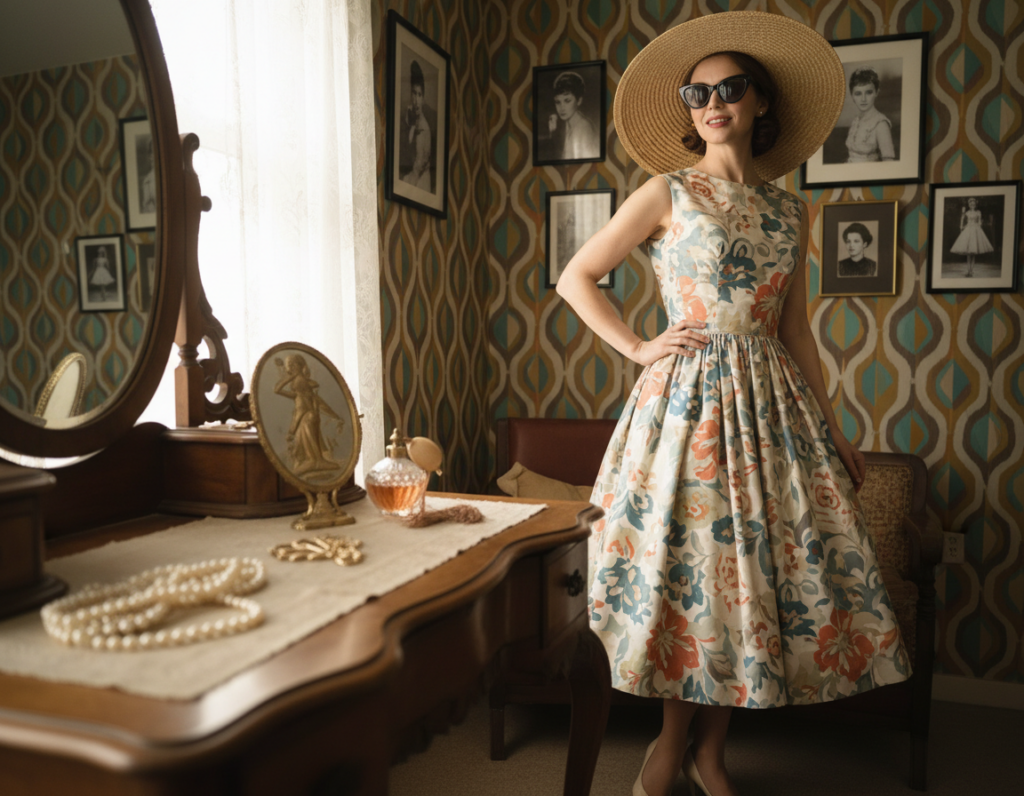
Tina Chow and history worn as personal language
Tina Chow’s 1987 Fortuny dress shows how vintage reads best when it feels lived-in. She balanced the garment with restrained jewelry and exact fit, so the dress read like a choice rather than costume.
Takeaway: fit, restraint, and confidence turn archival pieces into personal signatures.
Zendaya and the archive-as-event moment
When Zendaya wore Mugler’s 1995 “Gynoid” suit to the 2024 Dune premiere, the look gained instant global reach. Rarity, a clear design language, and a high‑visibility event made the pull read as deliberate prestige and cultural currency.
Why archives matter now:
- Nostalgia and sustainability both encourage buying fewer, older pieces.
- A documented provenance increases the garment’s perceived status.
- Archive pulls create conversation: the past meets a present moment and gains renewed relevance.
Practical shopping and styling tips
- Always compare measurements to your body; never rely on era sizing alone.
- Plan for tailoring: vintage can fit perfectly after modest adjustments.
- Check fabrics and seams; have delicate items cleaned by a specialist.
- Pair older pieces with modern basics—clean tees, fresh shoes, or a simple coat—to keep the look current.
“What endures is what people keep re-wearing, re-posting, and reinterpreting.”
| Example | Key quality | Modern lesson |
|---|---|---|
| Tina Chow — Fortuny (1987) | Integration into everyday presence; refined fit | Use restraint and tailoring to make vintage read personal |
| Zendaya — Mugler (1995) at 2024 premiere | Rarity; clear design language; event visibility | Archive pulls become cultural moments when paired with high visibility |
| Buying tips | Measurements; fabric care; tailoring | Invest in condition checks and alterations for longevity |
Conclusion
Great fashion moments share a simple grammar: a bold silhouette, a memorable image, and timing that makes the look feel inevitable. This combination is the way public dress changes and why certain pieces keep returning.
Readers should treat famous icons as templates, not blueprints. Borrow proportions, color stories, and accessory rules to make a look personal rather than copied.
Practical takeaway: pick one hero element—a dress, a suit, jeans, or an accessory—keep the rest clean, and commit to fit. Build a personal library: save photos, note repeatable formulas, and buy versatile pieces that work across looks.
In an endless scroll, the most enduring trends remain simple, specific, and wearable today.