Anúncios
Nearly 70% of Americans say a single well-chosen long coat changes how others see an outfit. That jump in perceived polish makes outerwear a high-impact purchase for anyone aiming for practical elegance.
The guide defines what a structured coat does in a modern wardrobe: it sharpens the silhouette, makes outfits look intentional, and upgrades daily dressing without a full formal closet.
This article serves U.S. readers who dress for commuting, workdays, weekends, dinners, and shifting weather. Readers can expect repeatable outfit formulas rather than fuzzy inspiration.
First, the piece explains structure and selection by body, height, and lifestyle. Then it walks through styling mechanics — proportion, contrast, and a column of color — and applies those rules across work, off-duty, and occasion looks.
Practical payoff: one smart jacket or coat coordinates with more products already in the wardrobe, reducing cost-per-wear and creating many outfits from fewer items.
Anúncios
For trench and long coat examples, see a concise visual guide at styling winter coats.
What Makes a Coat “Structured” and Why It Elevates an Outfit
A firm-lined coat gives instant structure, turning simple basics into a polished ensemble. Structured coats have built-in shaping: canvassing, firm seams, defined shoulders and tailored panels that hold form away from the body rather than collapsing.
Structured vs. softly structured jackets in a modern wardrobe
True structure relies on tailoring and weighty fabric. Softly structured jackets use knit or stretch blends for comfort while still offering a cleaner frame than a cardigan.
Anúncios
Why structure reads polished in casual business environments
Edges like sharp collars and neat button stances echo suiting cues. That visual language signals competence in a casual work setting without feeling formal or rigid.
Key design details that create authority and clean lines
- Defined shoulders, lapels, and sharp collars
- Welt pockets, vertical seams, and controlled hem shape
- Neat button stance and reinforced canvas in the chest
“A framed silhouette creates an immediate image of intention.”
Structure balances the body by squaring shoulders, smoothing curves, and creating a long, clean line. Controlled contrast — refined shoes or a minimalist bag — completes the effect. Most importantly, comfort is non-negotiable: softly built options offer credibility and all-day wear without sacrifice.
Choose the Right Structured Coat for Your Body, Height, and Lifestyle
Choosing the right outerwear means matching cut, length, and fabric to the wearer’s everyday life. A clear checklist saves time in stores and online. Start by prioritizing fit over fashion trends; comfort and proportion determine repeat wear.
Fit-first selection checklist:
- Shoulders should align with the natural shoulder line.
- Sleeves must allow a layer underneath without pulling.
- The front should close across chest and hips without strain.
Finding flattering lengths by height
Petite frames often favor short or knee lengths so the piece does not overwhelm. Average height wears knee-length easily for balanced proportion. Tall figures can carry full-length confidently; the hem can elongate or ground an outfit depending where it hits.
Tailored fit versus oversized
Tailored fits sharpen the silhouette and read professional. Oversized fits read modern and relaxed but need slim base layers and clean shoes to avoid bulk.
Single-breasted and double-breasted differences
Single-breasted jackets create a narrower front and a longer vertical line. Double-breasted fronts add perceived width and can emphasize the bust area—useful for some shapes, distracting for others.
Fabric, lining, and practical choices
Cotton gabardine suits spring/fall with water resistance. Wool-blend or cashmere-lined options work for cold months. Removable or quilted linings add seasonal flexibility—important for commuting and indoor heating.
Color strategy and lifestyle match
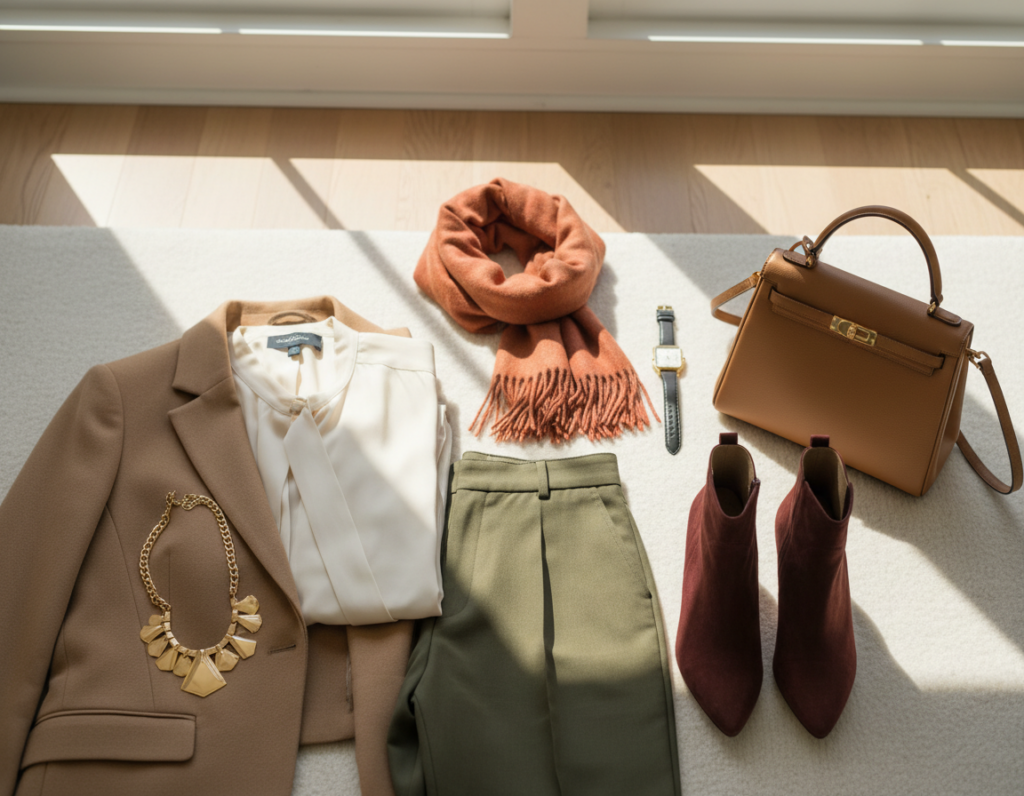
Neutrals (black, camel, navy, gray) maximize outfit mileage. Statement shades become focal points and pair best with simple basics. Those who drive or use transit may prefer lighter fabrics and mid lengths; frequent outdoor time calls for durable closures and longer hems.
“Choose the cut that aligns with daily needs; a practical choice becomes the wardrobe’s highest-use piece.”
How to Style Structured Coats with Proportions, Contrast, and a “Column of Color”
Using vertical color blocks and measured contrast gives every ensemble a cleaner visual line. The simple system below turns a single outer piece into many repeatable looks without fuss.
Build an internal column of color. Keep the top and bottom in a similar value — a dress and tights, or matching top and trousers — so the body reads as one long line. Then let the coat act as a frame. For an illustrated take on this idea, see a practical guide to a column of color.
Place contrast where it matters. Use shoes, bag, scarf, or lipstick as focal points. Contrast should draw the eye, while the internal column preserves clean proportions and polish.
- Examples: black top + black trousers + camel coat; cream knit + cream pants + colored jacket; monochrome knit set + tailored jacket.
- Bottom rules: long coats + slim pants; wide-leg trousers + sharp shoulders and streamlined layers.
- Waist tactics: trench belt, an external belt over the coat, or tailored seams that suggest shape.
Keep comfort in mind. Choose stretch bases like rib knit and ponte pants for mobility. Finish with a quick mirror check: shoulders aligned, one focal point only, and the base reading as a single outfit. This method keeps fashion practical and repeatable.
“A long vertical line simplifies proportion and makes each outer layer feel intentional.”
How to Style Structured Coats for Work-Ready Outfits Without Feeling Stiff
Office outerwear must balance polish with comfort so professionals can move through a day of meetings without fuss.
Casual Friday credibility:
A softly built jacket over dark jeans reads more intentional than a cardigan. Pair a simple top, dark jeans, and a clean jacket with loafers or ankle boots.
Add one refined accessory — a structured tote or leather belt — to finish the outfit without extra fuss.
Office formulas:
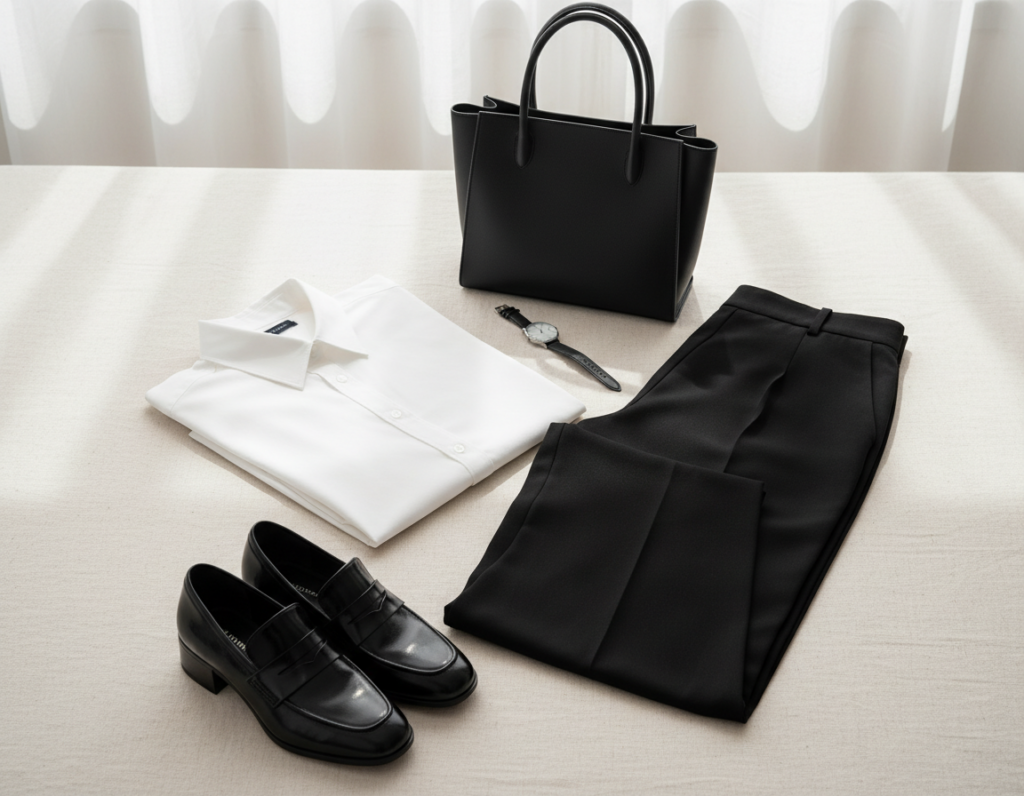
- Tailored trousers + button-down + long coat for authority.
- Pencil skirt + fine-gauge knit + coat for neat lines.
- Minimal accessories keep the focus intentional and clean.
Work dresses:
A dress creates a built-in column of color; an outer layer instantly completes the look for meetings or presentations. Choose a coat that closes without pulling for the best fit.
Shoes and final touches:
Loafers give modern polish, ankle boots bridge seasons, and heels lengthen proportion with long hems or wide trousers.
Practical products matter: wrinkle resistance, a comfortable lining, and pockets make daily rotation easier. Finish with soft scarf textures, subtle jewelry, or a tonal bag for an approachable touch.
Off-Duty Outfit Ideas: Jeans, Dresses, and Knit Layers That Still Look Put-Together
A brisk, casual outer layer can turn a weekend outfit from undone to deliberate.
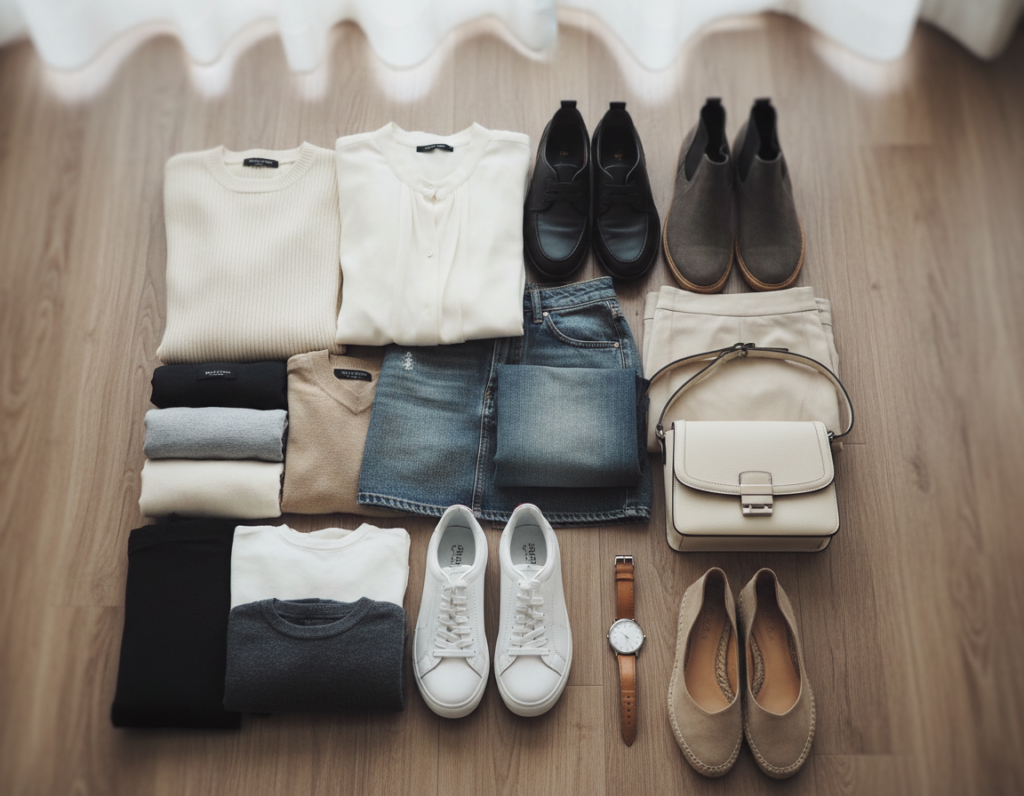
Weekend uniform: a clean jacket, plain T-shirt, slim or straight jeans, and white sneakers creates a repeatable formula. Keep colors neutral for a crisp, intentional look that works for errands, coffee, or transit.
Coat-over-dress combos for errands and brunch
Choose a simple dress silhouette — a shirt dress, knit midi, or slip — and let a neat outer piece add contrast and a clean frame. Swap sneakers for ankle boots for an instant uplift.
Layering with hoodies and sweaters for a modern jacket vibe
A streamlined hoodie or a fine-gauge knit fits neatly under a roomy jacket. Aim for smooth fabrics under textured knits so the outer line stays sharp. Avoid bulky layers unless an intentionally oversized look is the goal.
- Accessory rules: one practical crossbody bag, one finishing element (sunglasses or a scarf), footwear that matches the mood.
- Cuff jeans to show an ankle, add a tonal cap, or wear monochrome layers under a statement outer piece for a polished result.
- Swap sneakers for boots or change the dress length and create multiple outfits from the same piece.
“A single neat outer layer makes casual dressing feel purposeful.”
Occasion and Weather Styling: Long Coats and Trench Coats in Real Life
Real-life wear calls for choices that suit weather, event, and the wardrobe already in rotation. This section gives concise, practical tips for day, night, formal, and seasonal dressing.
Casual day out
Long outer layers lift simple layers—tee, slim jeans, and a knit—without fuss. Pair a crossbody bag, beanie, and low boots for comfort while keeping a clean outline.
Choose light-weight linings for mild temps and a scarf when mornings run cool. These small details preserve mobility and polish during errand time.
Night-out polish
A black dress or tailored jumpsuit is the easiest base. A neat outer piece adds authority; match with heels or sharp ankle boots for an elevated finish.
Keep accessories minimal and let one element be the focal point—either the coat or a statement bag. This keeps the outfit coherent for an evening woman on the move.
Formal events and transitional weather
For formal settings, prefer wool-cashmere blends and clean closures; fit matters more than trend. Minimal jewelry and refined hardware read as intentional.
For light rain and mild days, cotton gabardine trenches offer breathability and weather resistance. Their classic details—belt, storm flap, epaulettes—combine function with vintage fashion cues.
Cold-weather strategy and trench details
Layer thin thermals and a knit mid-layer under a wool-blend coat for warmth without bulk. Choose boots with grip for winter wear and preserve the silhouette.
Trench notes: the belt shapes the waist, storm flaps add runoff and visual interest, epaulettes strengthen the shoulder line. Double-breasted fronts can increase perceived width; a single-breasted option keeps the front sleeker. Counterbalance wider fronts with slim inner layers for a balanced body proportion.
“One well-cut outer piece will carry many outfits across season and event.”
Conclusion
, One careful outer choice anchors many looks and stretches the wardrobe’s value. This guide showed the core promise: a framed outer product makes outfits read deliberate, polished, and season-ready.
Follow the decision framework: define structure, pick length and fit, choose single or double-breasted based on desired width, then use a column of color and a single point of contrast. Practicality matters—match the piece with commute, weather, and existing products in the wardrobe.
Quick checklist for a final buy: shoulder fit, hem placement, layering room, seasonal fabric, and a color plan that yields multiple outfits for work, weekend, and night. A woman needs one reliable piece; build one internal column, add the outer layer, and finish with one intentional accessory.
Next step: select one structured anchor for the season, create three go-to outfits, and track cost-per-wear. This article and its title act as a compact description for action and repeat use.